
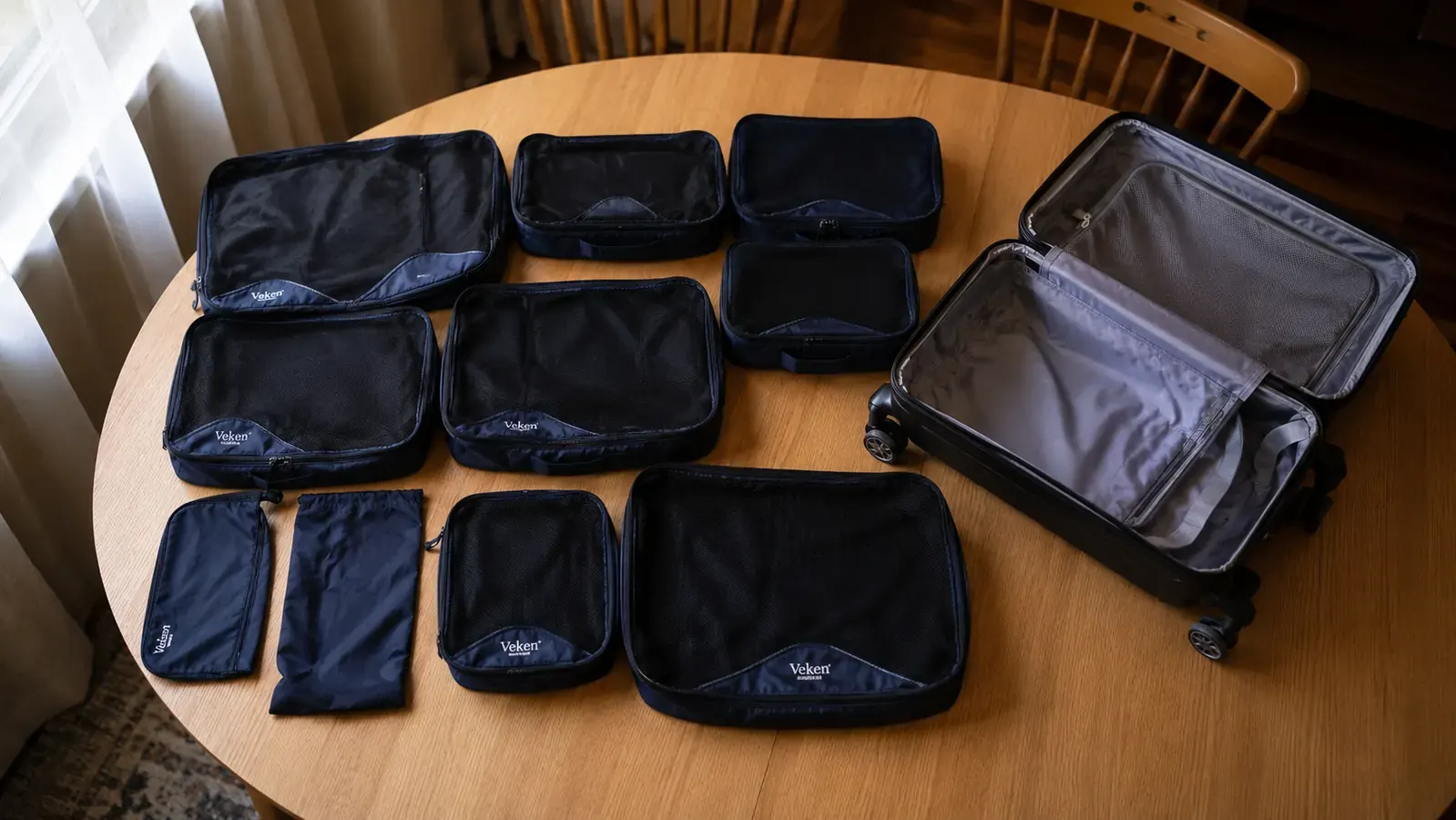
Let me tell you what the Veken listing on Amazon doesn't spell out clearly, because I bought this set based on the star rating alone and spent the first two trips figuring out what nobody put in the product description. The Veken 10-set packing cubes are rated 4.6 stars across more than 33,000 reviews, and that rating is basically right. But there are a handful of things you should know before you buy, starting with the size question that most people get wrong.
I am Casey, and I have taken these cubes on somewhere north of 25 trips now, from long weekends in Nashville to two-week international stretches where I was living out of one bag. This review is not about whether packing cubes work in general. They do. This review is about whether the Veken set specifically is the right one, what its quirks actually cost you in practice, and the honest case for buying something else instead if you fall into a specific traveler type.
The Quick Verdict
One of the best-value packing cube sets you can buy right now. The zipper quality punches well above the price, the ten-piece count covers edge cases most sets miss, and the flat collapse makes storage at home painless. The compression cubes oversell their compression, and the mesh panels are a dealbreaker for a narrow group of travelers.
Amazon Check Today's Price →If you're still throwing clothes loose in your suitcase, this is the fix, and it costs less than dinner.
The Veken 10-set includes large, medium, small, and slim cubes plus a shoe bag and laundry bag. It ships as a complete system, not a starter kit you need to add to.
Amazon Check Today's Price on Amazon →The Size Question Nobody Answers for You
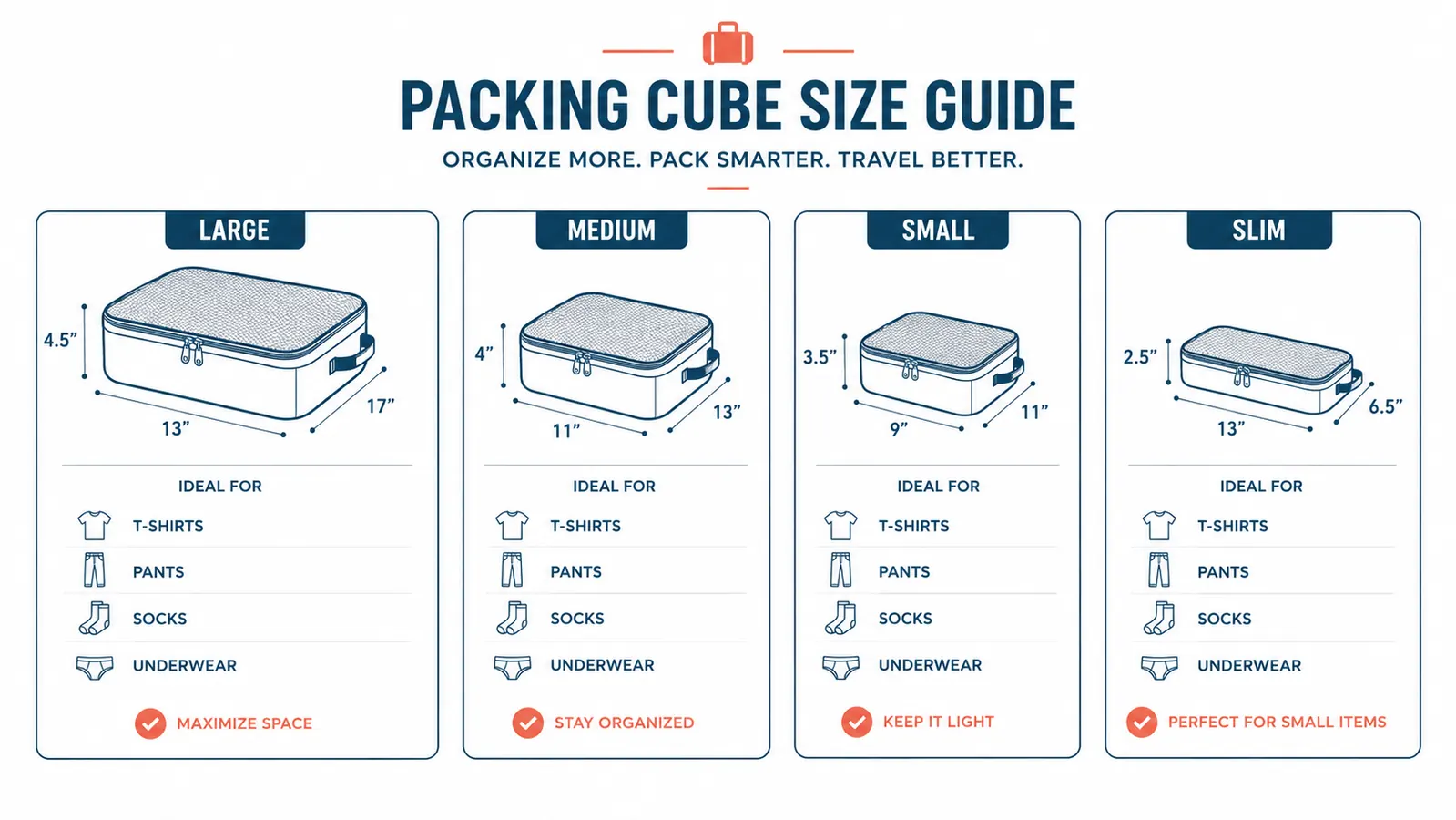
The first thing most buyers get wrong is the size selection, and Veken's listing does not help you much here. The large cubes measure roughly 17.5 by 12.5 inches. That is bigger than a lot of people expect. When you stuff a large cube with six or seven folded shirts and zip it shut, the resulting block is about the same footprint as the bottom of a 22-inch carry-on spinner. It stacks cleanly in checked luggage. In a carry-on, though, a fully loaded large cube plus a second large cube will fill your bag before your laptop sleeve, power bank, and anything else makes it in.
The medium cubes are the ones most carry-on travelers should reach for first. At roughly 13.5 by 9.5 inches, they fit three or four days of shirts, or a week of underwear and socks, or all the gym clothes for a five-day trip. You can fit two mediums side by side in a standard 22-inch spinner and still have room alongside them for a small cube and a slim. That stack leaves your suitcase pockets free for shoes, toiletries, and the flat items that do not go in cubes.
The slim cubes are the piece of the set that surprises people. They measure roughly 13.5 by 5 inches, about the shape and thickness of a hardcover novel. Seasoned packers use them to fill the vertical gaps that form when you stack cubes in a suitcase, which means those cubes stop shifting during transit. First-time cube users often leave the slims out entirely because they can not figure out what goes in them. The answer: socks, exclusively. One slim cube fits ten to twelve pairs of rolled socks, which is more than enough for any trip.
What 'Compression' Actually Means in This Context
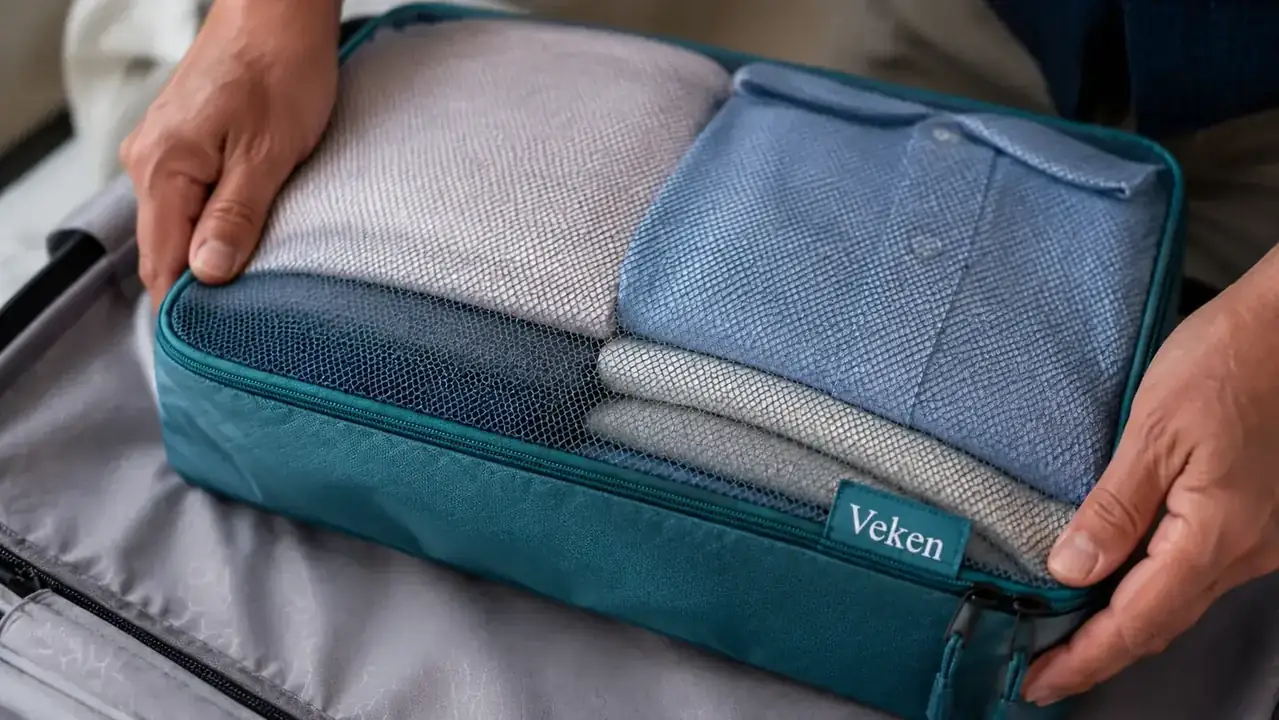
Veken calls two of the ten pieces compression cubes. The word compression is doing a lot of work on that label. These are not compression cubes in the sense of a roll-up packing cube or a vacuum-seal bag where you squeeze out air. What they are: cubes with a second zipper that cinches down over a buckle closure, reducing the cube's height by maybe an inch or inch and a half after you've already zipped the main closure. The effect is real but modest. Think 15 to 20 percent volume reduction, not 40 or 50 percent.
In practice, that compression is most useful for bulky items like fleeces, hoodie sweatshirts, or a lightweight down jacket. Fill the large compression cube with a fleece and two long-sleeve shirts, zip the main closure, then buckle and zip the compression layer, and the cube goes from slightly domed to flat-topped. That saves maybe half an inch of vertical height in your suitcase. Across a fully packed bag, that can be the difference between a lid that closes cleanly and one you have to sit on.
What compression will not do: let you pack for a two-week trip in a bag sized for four days. I have watched people in online packing forums expect exactly that and come away disappointed. If your goal is fitting more total clothing volume, the solution is packing lighter, not compressing harder. The Veken cubes help you pack more efficiently by eliminating wasted space and preventing clothes from shifting. They are not a volume-multiplier.
The slim cubes are the piece that surprises everyone. They look useless in the listing photos. By trip two, you will reach for them on every single pack.
The Mesh Panel: Feature or Flaw?
Every Veken cube has a mesh top panel instead of a solid fabric top. The intention is clear: you can see what is inside each cube without opening it. In theory, this is a great feature. In practice, it depends entirely on what kind of packer you are and who you travel with.
If you are a solo traveler with an organized packing system, the mesh is genuinely useful. At a hotel, you can look at your bag and see at a glance which cube holds your workout gear and which one holds tomorrow's conference-day outfit. No opening and rooting around. In the overhead bin, you can grab the cube you need without disturbing everything else. I like the mesh for exactly these situations.
If you are privacy-minded, though, the mesh is a constant low-grade annoyance. Your underwear is visible through the top of the cube whenever your bag is open. Airport security bins, hotel check-in counters, crowded hostel common rooms: your cube is showing its contents to anyone who glances over. Some travelers genuinely do not care about this, and that is fine. Others care more than they expected to. If the latter sounds like you, there are competing cube sets with solid tops that are worth looking at, even if they sacrifice the at-a-glance convenience.
Zipper and Build Quality: The Detail That Earns the Price
Packing cube zippers are usually where value-priced sets fall apart, sometimes literally. The worst I have owned had a zipper that split its track on the second trip, leaving me with a cube that wouldn't close. At that point the cube is useless: a loose fabric sleeve that your clothes spill out of. I mention this because the Veken zippers are notably better than their price point would suggest.
The zipper teeth are dense and even, and the pulls have a flat fabric tab rather than a thin metal loop. That flat tab matters more than it sounds: when a cube is fully loaded, the zipper is under tension, and a thin pull cuts into your fingers when you try to force it closed. The Veken flat tab lets you pull without discomfort even on a stuffed cube. After more than two years with this set and no zipper failures across multiple cubes and dozens of trips, I am confident saying this is one area where Veken significantly outperformed the price.
The seams have held equally well. The corners and side seams are the first place polyester cubes develop stress tears, and none of mine have done so. The ripstop weave on the main panels contributes here: a small puncture or nick in ripstop fabric does not propagate into a tear the way a plain weave would. This is not premium luggage material, but it is meaningfully better than the smooth polyester on the cheapest cube sets.
The Color-Coding System: Smarter Than It Looks
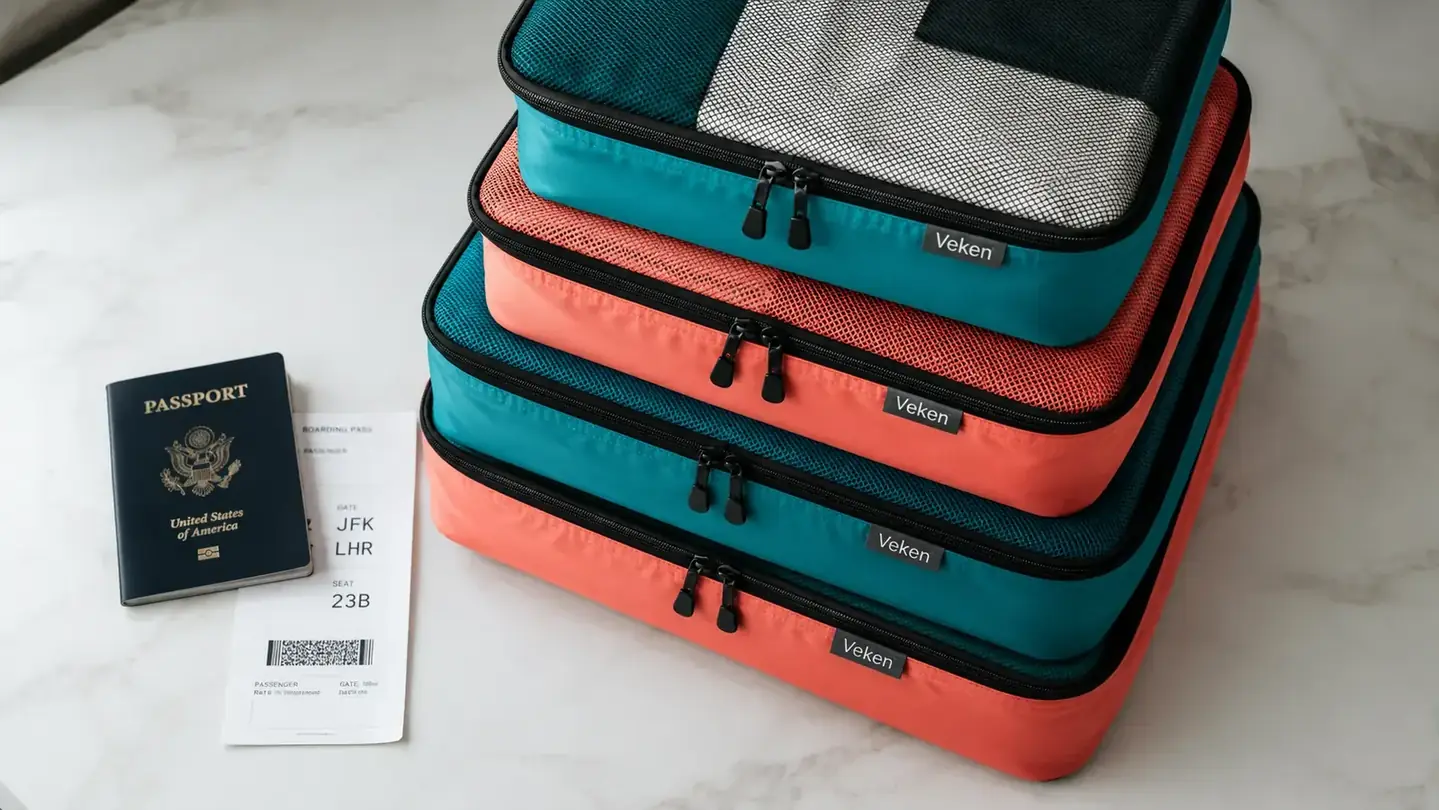
Veken sells the set in a range of color combinations, and most buyers pick whatever looks nice in the listing photos. That is a fine approach, but there is a more useful way to think about it: use the color variation within the set as an organizational system. The 10-set ships with cubes in multiple colors, and you can assign colors to categories rather than just grabbing whichever cube is on top.
My current system: teal cubes for tops, coral for bottoms, the shoe bag stays shoe-bag-colored, and the laundry bag goes in the outside pocket of my suitcase. After a few trips, muscle memory takes over and I stop thinking about it. I grab the right color without reading a label. For family travel, this approach is even more useful: each person gets their own cube color within the set and the confusion of whose underwear is whose disappears entirely.
One thing the listing doesn't mention clearly: the color combinations vary by seller and stock batch. If you order the 10-set twice (say, you want a second set for a partner), you may get slightly different shades or combinations. Not a dealbreaker, but worth knowing if color consistency matters to your system.
What I Would Change If I Were Designing This Set
Honest answer: one main thing. I would add a small external loop or grab handle to the larger cubes. When a large cube is packed to capacity and sitting in a suitcase, the only way to pull it out is to pinch the fabric along the edge. That works fine most of the time, but in a fully stuffed bag where the cube is wedged in tight, you end up having to tilt the whole suitcase to work it free. A single sewn loop handle on the short end of the large and medium cubes would fix this completely, and it would add almost nothing to the cost or weight. Several competitors include this feature. Veken does not.
The second thing I would tweak is the laundry bag. It is simple mesh, which is serviceable, but mesh laundry bags have a way of letting faint odors escape into the rest of the suitcase by day five or six of a long trip. A non-mesh laundry bag with a drawstring top would be a meaningful upgrade, especially for travelers going more than a week between laundry access. If this is your situation, I recommend supplementing the included laundry bag with a small dry bag or a zippered mesh bag with a liner. It is a small gap in the system.
What We Liked
- Zipper quality is significantly better than competing sets at this price point
- Ten-piece set addresses nearly every packing scenario, including the often-missed slim cube
- Flat collapse when empty makes home storage completely painless
- Mesh panels let you identify contents at a glance without unzipping
- Color variation within the set enables a reliable visual organization system
- Ripstop weave panels resist spreading tears better than smooth-weave alternatives
Where It Falls Short
- Mesh tops expose contents to anyone who looks into your bag, which bothers some travelers
- No grab handle on large or medium cubes makes extraction from a stuffed suitcase awkward
- Compression cubes deliver modest 15 to 20 percent compression, not the dramatic shrinkage the label implies
- Laundry bag is basic mesh with no odor containment for long trips
- Color batches can vary between orders if buying multiple sets
How Veken Compares to a Solid-Top Set
The biggest structural decision in the packing cube category is mesh top versus solid top. Veken is mesh. Sets like the Gonex compression cubes or the ebags classic cubes use solid fabric tops, which means no visible contents but also no at-a-glance identification. If privacy matters to you more than grab-and-go convenience, a solid-top set is worth the trade. For a deeper breakdown of how Veken stacks up against BAGAIL, which uses a similar mesh-top design, see our Veken vs BAGAIL head-to-head comparison.
Within the mesh-top category, Veken is the better buy at this price for most travelers. The main argument for paying more is getting a thicker, more structured fabric that stays open when you try to pack into it. The Veken fabric is light enough that an empty cube collapses on itself a bit when you're trying to stuff clothes in, which requires one hand to hold the cube open and the other to pack. It's a minor inconvenience that experienced cube users adapt to quickly, but if it sounds annoying to you, a stiffer-fabric set solves it at roughly double the cost.
Who This Is For
The Veken 10-set is a clear yes for travelers who move hotels often and need to repack without fully unpacking, for families who want to keep everyone's clothes separated in a shared bag, and for anyone doing four or more trips a year who has never tried packing cubes. It is also a strong choice if you fly carry-on only and want to maximize usable space inside a small bag. And it is an easy recommendation for gift-giving: the set looks polished, covers all the bases, and is affordably priced. For more on why packing cubes are worth adding to your kit before your next trip, take a look at our long-term Veken review covering 18 months of real-trip use.
Who Should Skip It
Skip the Veken set if your main concern is privacy and you don't want your clothing visible whenever your bag is open. Also skip it if you are an adventure traveler whose bag regularly takes serious abuse: being thrown into the back of trucks, sitting in wet gear for hours, or getting dragged over rough terrain. The Veken fabric holds up well for normal travel but is not rated for real outdoor punishment. And skip it if your primary goal is maximum compression to fit more total volume into a small bag. The compression cubes help, but they are not the solution to that problem. The solution to that problem is packing less.
Ready to stop repacking the same suitcase four times before a trip? This is where to start.
The Veken 10-set gives you the full system in one order: two large, two medium, two small, two slim, a shoe bag, and a laundry bag. No guessing which sizes you need or buying pieces separately.
Amazon Check Today's Price on Amazon →